Floors That Handle Basement Moisture Conditions
Basement Flooring & LVP Installation in Medina for homeowners replacing stained carpet, cracked concrete coatings, or outdated flooring
Basements in Northeast Ohio experience moisture exposure from concrete slab vapor transmission, seasonal humidity shifts, and occasional water intrusion events that conventional flooring materials cannot tolerate long-term. Blueprint Builders installs waterproof luxury vinyl plank flooring engineered specifically for basement environments, delivering realistic wood-look finishes over concrete subfloors without the warping, staining, or mold risks associated with traditional hardwood or carpet. Homeowners see these upgrades in family rooms, gyms, entertainment spaces, and finished basements where durability and easy maintenance outweigh aesthetic compromises.
The installation process includes concrete subfloor preparation to address irregularities, vapor barrier placement to block moisture transmission from below, and underlayment systems that provide cushioning and additional waterproofing protection. Luxury vinyl plank materials lock together without adhesive in many applications, allowing the floor to expand and contract naturally with temperature changes while maintaining a seamless appearance across large basement areas.
Schedule a property evaluation to assess your basement's current flooring condition and discuss waterproof material options suitable for your space.
Why Basement-Specific Flooring Materials Matter
Standard flooring materials fail in basements because concrete slabs transmit moisture vapor even when no visible water appears, and Northeast Ohio's freeze-thaw cycles create slight slab movement that cracks rigid coatings or loosens adhesive-backed products. Waterproof LVP flooring uses a composite core structure that resists swelling, does not support mold growth, and handles the thermal expansion differences between a cool concrete base and warmer room air above.
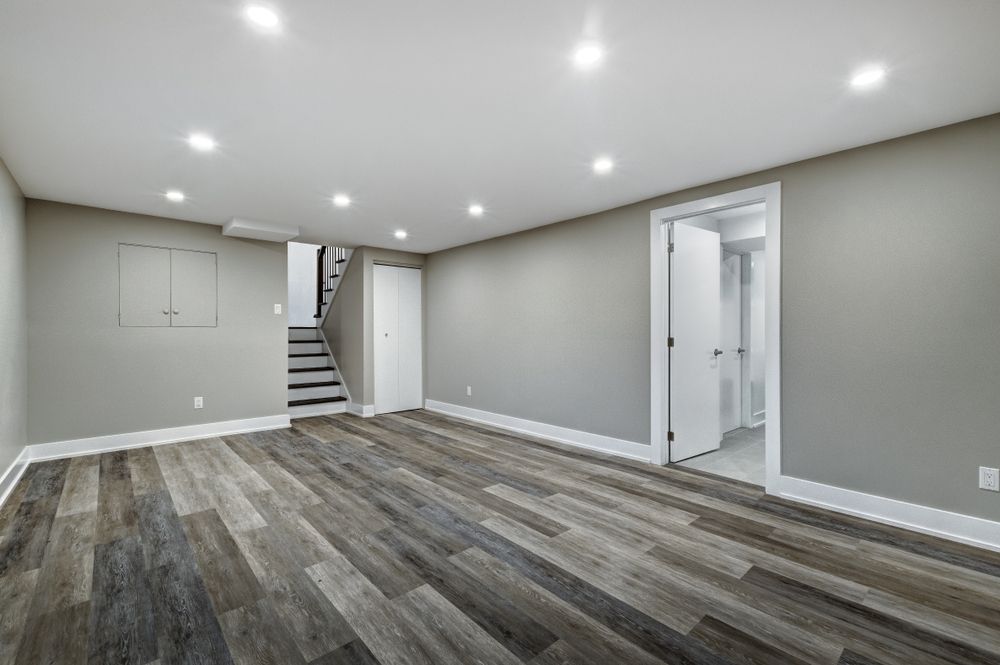
After installation completes, you walk on a warmer surface compared to bare concrete or tile, and the planks resist scuffing from furniture movement, pet claws, or exercise equipment. Spills wipe clean without staining, and the material does not absorb odors or trap allergens the way carpet does in below-grade environments. The finished floor looks consistent across the entire basement, and the click-lock installation method allows future plank replacement if isolated damage occurs without tearing up surrounding areas.
Proper subfloor preparation eliminates dips and high spots that create uneven walking surfaces or visible seams, and vapor barriers prevent moisture from reaching the flooring layer even during high-humidity months. These steps separate short-term cosmetic fixes from installations that remain stable and attractive for years without warping, lifting, or developing musty odors.
Common Questions About This Service
Property owners in Medina often ask about moisture protection, material durability, and how LVP flooring compares to other basement options.
What makes luxury vinyl plank suitable for basements?
LVP uses a waterproof core that does not swell or delaminate when exposed to moisture, unlike laminate or hardwood. The material installs directly over concrete with appropriate underlayment, and the click-lock design accommodates slight slab movement without cracking or separating.
How does subfloor preparation affect the finished result?
Grinding down high spots, filling cracks, and leveling uneven concrete ensures planks lie flat without rocking or creating gaps. Skipping preparation leads to visible seams, uneven walking surfaces, and premature wear at stress points where flooring flexes over irregularities.
Can LVP flooring handle basement gym equipment or heavy furniture?
The material resists denting and scratching better than laminate or vinyl sheet products, and thicker luxury plank options distribute weight across a rigid core. Furniture pads still prevent isolated pressure marks, but the flooring handles typical basement activity without showing significant wear patterns.
Why do vapor barriers matter even in dry basements?
Concrete slabs continuously release moisture vapor regardless of whether visible water appears, and that vapor eventually reaches flooring materials installed above. Vapor barriers block transmission before moisture affects adhesives, underlayment, or the flooring itself, preventing long-term failures that occur gradually rather than immediately.
How does basement flooring connect to adjacent rooms or stairways?
Transition strips create clean boundaries between basement flooring and carpeted stairs, tile laundry areas, or unfinished storage sections. Matching plank direction across rooms creates visual flow, while deliberate pattern changes define separate functional zones within open basement layouts.
Blueprint Builders installs basement-ready flooring systems throughout Medina, addressing moisture concerns with proper underlayment and vapor barrier techniques. Arrange an on-site visit to evaluate your basement's flooring needs and review material samples suited to your space.