
Turn Below-Grade Square Footage Into Usable Space
Full Basement Remodeling & Finishing in Medina for Homeowners Seeking to Maximize Living Area Without Adding On
Unfinished basements sit empty in many Northeast Ohio homes despite offering hundreds of square feet that could function as entertainment rooms, guest spaces, workout areas, or flexible recreational zones—but concrete floors, exposed joists, and uninsulated foundation walls make those areas uncomfortable and impractical for extended use. Blueprint Builders converts raw basement spaces into insulated, finished living areas where temperature stays consistent year-round and lighting, flooring, and room layouts match the functionality of upper floors. The process begins with structural preparation including foundation wall inspection, moisture assessment, and framing that creates room divisions and conceals mechanical systems while maintaining ceiling height.
Basement finishing includes framing interior walls to define individual rooms, drywall installation over insulation that reduces heat loss and sound transfer, flooring systems designed for below-grade conditions where concrete slabs remain cooler than wood subfloors, ceiling installation using drop tiles or drywall depending on access requirements for utilities, and lighting circuits positioned to eliminate dark corners and provide task coverage for specific activity zones. Moisture management remains critical in below-grade environments, so vapor barriers are installed against foundation walls before insulation and framing, and any existing water intrusion issues are addressed before interior materials are added.
Set up a consultation to discuss basement layout ideas and review how your current foundation conditions affect finishing options.
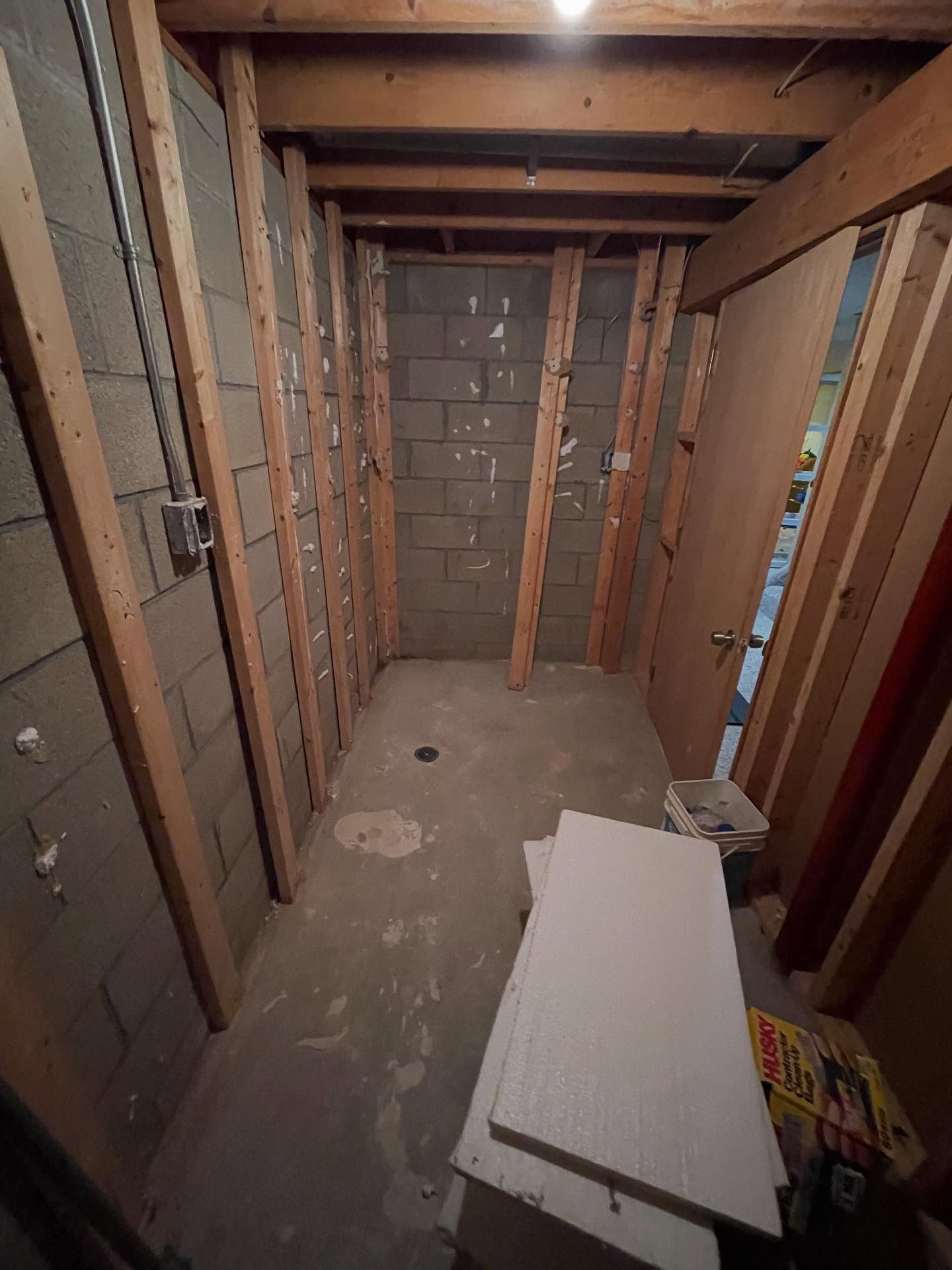
How Below-Grade Spaces Are Prepared for Year-Round Comfort
Foundation walls are insulated with rigid foam or fiberglass batts installed between framing studs, and air sealing around rim joists prevents drafts that pull conditioned air out of the finished space. Flooring materials are selected based on moisture tolerance, so carpet padding includes moisture barriers, luxury vinyl plank is installed as floating floors that allow movement without buckling, and tile installations use thinset mortars rated for concrete substrates. Electrical circuits are added to support multiple lighting zones, outlets positioned for furniture arrangements, and dedicated circuits if the space will include home theater equipment or exercise machines.
Once the basement is finished, you'll notice temperature stability that makes the space comfortable during both winter months when concrete slabs typically feel cold and summer months when basements offer natural cooling, lighting that provides adequate visibility without the harsh glare common in unfinished basements lit by single bulbs, flooring that feels warmer underfoot than bare concrete and reduces sound transmission to mechanical equipment below, and defined room layouts that create purpose for areas that previously served only as storage overflow. Ceilings conceal ductwork and plumbing lines while maintaining enough height clearance to avoid a low, oppressive feel.
Blueprint Builders coordinates basement remodeling from framing and insulation through final trim installation, so each trade phase aligns without scheduling gaps. Basement-ready materials—including mold-resistant drywall, moisture-tolerant insulation, and flooring systems designed for direct concrete installation—are selected to handle the humidity and temperature conditions typical of below-grade environments.
Answers to Frequent Questions About Basement Finishing
Homeowners often ask about moisture control, ceiling options, and how finishing affects mechanical access in basement spaces.
What moisture issues need resolution before finishing begins?
Active water seepage, visible efflorescence on foundation walls, or damp concrete floors indicate drainage problems that require exterior grading corrections, sump pump installation, or interior drain systems before framing and insulation are added. Medina properties with older foundations sometimes need perimeter drainage improvements to redirect groundwater away from the basement.
How is ceiling height affected by drop tile versus drywall ceilings?
Drop tile systems hang below floor joists and reduce ceiling height by three to four inches but provide removable access to plumbing and electrical lines, while drywall ceilings finish flush to the joists but require cutting and patching anytime access is needed for repairs.
Why does insulation placement matter in basement framing?
Insulation installed directly against concrete foundation walls without an air gap traps moisture between the concrete and the insulation, which leads to mold growth, so framing should include a vapor barrier and air space that allows any condensation to drain downward rather than saturate insulation material.
When should egress windows be added during basement finishing?
Building codes require egress windows in basement bedrooms to provide emergency exit routes, and adding them involves cutting through the foundation wall and installing a window well outside, so the decision affects both project scope and budget.
What room layouts work best for rectangular basement footprints?
Open plans with minimal full-height walls preserve sightlines and make the space feel larger, while partial walls or columns define activity zones without blocking light flow from windows or stairwell openings.
Blueprint Builders finishes basements where structural conditions, moisture management, and layout customization are addressed within a single coordinated project. Request a basement consultation to review your current space and explore finishing approaches that match your intended use and budget limits.