
Shower Systems That Replace Outdated Fiberglass Surrounds
Custom Walk-In Showers & Tile Work in Medina for Homeowners Upgrading to Spa-Inspired Bathroom Aesthetics
Frameless glass enclosures, built-in niches for toiletries, bench seating that provides a place to sit during longer showers, and custom tile layouts using large-format porcelain or natural stone transform basic bathing areas into focal points that combine luxury appearance with improved daily function. Blueprint Builders installs walk-in shower systems in Medina where tile selection, waterproofing methods, and fixture placement are customized to match modern, transitional, or spa-inspired design preferences. Old fiberglass tub-shower units crack along seams, discolor from hard water deposits, and limit layout flexibility because they arrive as pre-molded units that dictate fixture positions.
Custom shower installation begins with demolition of existing surrounds and inspection of wall framing for water damage that requires repair before tile work proceeds, followed by waterproof membrane installation that creates a continuous barrier from the shower pan up the walls to above showerhead height, then tile layout planning so grout lines align with niches and corners without narrow slivers that look unfinished, and finally glass enclosure fitting once tile and grout are fully cured. Slip-resistant flooring options include textured porcelain mosaics or natural stone with honed finishes that provide traction when wet, and curbless entry designs improve accessibility by eliminating the step-over threshold common in traditional shower pans.
Arrange a design consultation to explore tile materials, layout options, and glass configurations based on your bathroom's existing dimensions.
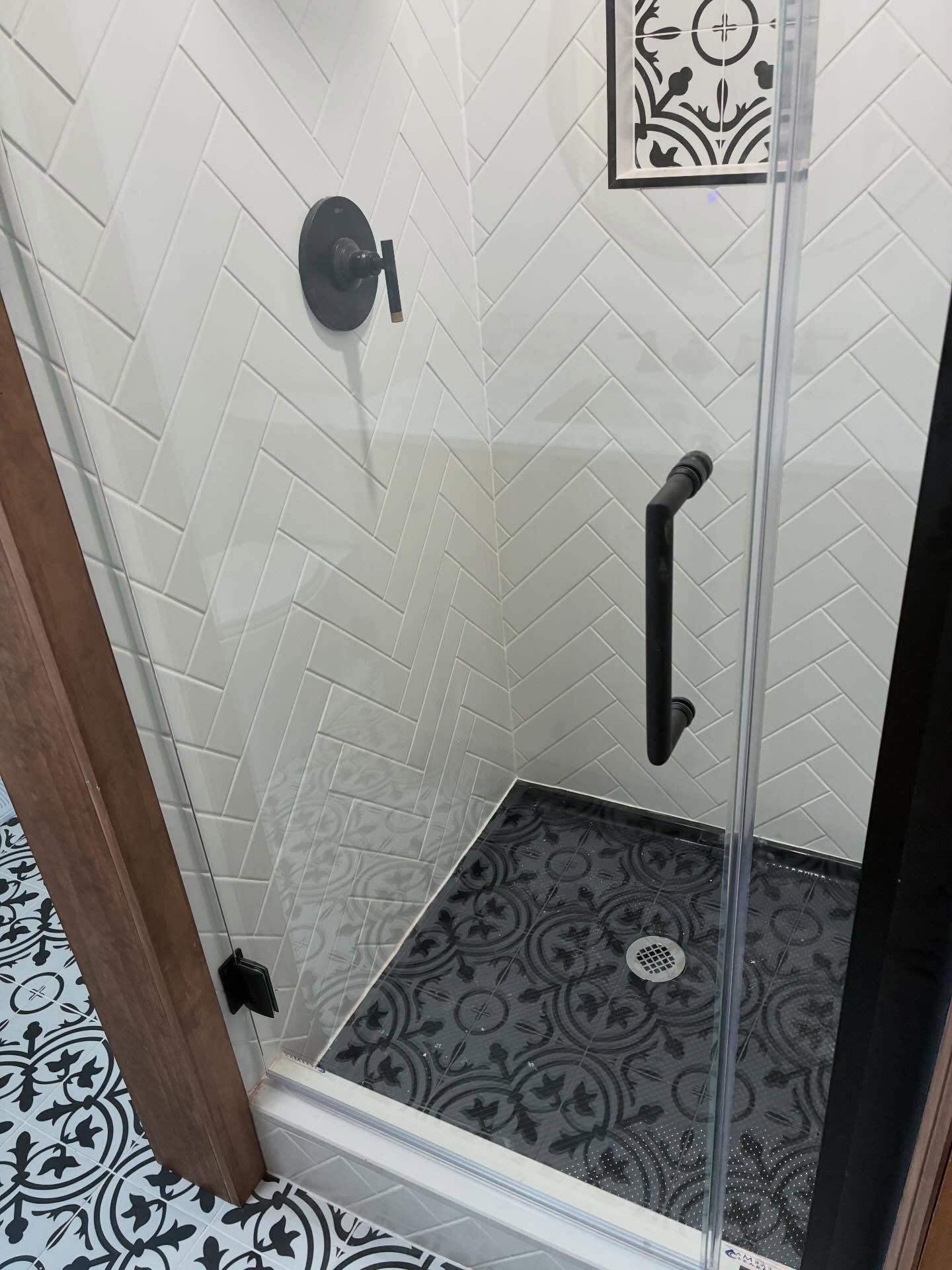
What Changes After Custom Tile Installation
Waterproof membranes extend under the tile and up the walls in a continuous layer, so water that penetrates grout joints is still blocked from reaching wood framing or drywall substrates. Tile is set in thinset mortar mixed to proper consistency—too wet and it slumps under the tile's weight causing lippage, too dry and it doesn't bond fully, leaving hollow spots that crack under impact. Grout joints are filled completely and then sealed after curing to prevent water infiltration and staining from soap residue.
After installation, you'll notice tile surfaces that stay level without edges lifting higher than adjacent tiles, grout lines that remain uniform in width and don't crack at inside corners where walls meet floors, built-in niches that sit flush with surrounding tile rather than protruding awkwardly or recessing too deeply, frameless glass that swings smoothly without scraping against tile edges, and bench seating positioned at a comfortable height for sitting without requiring a deep squat or leaving legs dangling. Water drains toward the shower floor without pooling in corners, and multiple showerheads or body sprays deliver consistent pressure when the system is designed with adequate supply line sizing.
Premium tile materials include porcelain that resists staining and requires no sealing, ceramic with glazed finishes available in subway, hexagon, or large-format patterns, natural stone such as marble or travertine that adds organic texture but needs periodic sealing to prevent water absorption, and glass accent tiles that reflect light and add visual depth. Blueprint Builders handles tile selection, waterproofing system installation, and precision cutting around fixtures so every edge aligns without gaps that expose substrates or allow water penetration.
Common Questions About This Service
Homeowners often ask about tile choices, waterproofing systems, and how custom showers differ functionally from prefabricated units.
What makes frameless glass enclosures different from framed versions?
Frameless systems use thicker tempered glass panels secured with minimal hardware, which eliminates the metal channels that collect soap scum and mildew in framed enclosures, and the clean sightlines make smaller bathrooms feel more open visually.
How are built-in niches waterproofed during installation?
Niches are framed into the wall cavity before tile work begins, then lined with waterproof membrane that integrates with the surrounding shower membrane, and tile is set inside the niche with sloped bottoms so water drains forward rather than pooling at the back.
Why do some tile installations crack while others remain intact for decades?
Cracking occurs when the substrate flexes due to inadequate underlayment support, when thinset mortar doesn't fill completely under the tile leaving hollow voids, or when expansion joints are omitted at transitions between different materials such as tile meeting drywall.
When should natural stone be sealed after installation?
Stone tile should be sealed after grout has cured fully, typically seven to ten days post-installation, and resealed annually or when water no longer beads on the surface, because unsealed stone absorbs moisture that leads to discoloration and efflorescence.
What tile sizes work best in walk-in showers?
Large-format tiles reduce grout joint quantity, which minimizes cleaning effort and potential leak points, but require flatter wall surfaces and skilled installation to avoid lippage, while smaller mosaics conform better to sloped shower floors and provide more slip resistance through increased grout texture.
Blueprint Builders installs custom walk-in showers where tile work, waterproofing, and glass enclosures are coordinated to produce both visual impact and long-term durability. Schedule a consultation to review design options and discuss how custom tile work fits within your bathroom remodeling timeline and budget.