
Surfaces That Handle Water Without Deteriorating
Bathroom Flooring Installation in Medina for Properties With Cracked Tile, Worn Vinyl, and Water-Damaged Surfaces
Older Northeast Ohio homes frequently have bathroom floors showing visible wear—cracked grout joints that allow water seepage into subfloors, vinyl planks curling at edges from repeated moisture exposure, tile that rocks underfoot because thinset mortar has debonded, and discolored areas around toilets where wax ring leaks have saturated the plywood underneath. These conditions worsen over time as water penetration spreads damage deeper into structural layers, eventually requiring subfloor replacement alongside surface flooring upgrades. Blueprint Builders installs waterproof flooring systems designed specifically for bathroom environments where moisture levels remain elevated and spills occur frequently.
Flooring replacement begins with removal of existing materials down to the subfloor, inspection for soft spots or discoloration indicating water damage, and replacement of compromised plywood sections before new flooring is installed. Waterproof options include ceramic or porcelain tile set in thinset mortar over cement backer board, natural stone such as slate or marble that provides textured surfaces with organic color variation, and luxury vinyl plank systems with waterproof cores that install as floating floors without adhesive. Subfloor preparation ensures the surface is level and structurally sound, because uneven substrates cause tile to crack and vinyl planks to develop gaps at seams.
Schedule a flooring consultation to review material options and assess whether your current subfloor requires repair before new surfaces are installed.
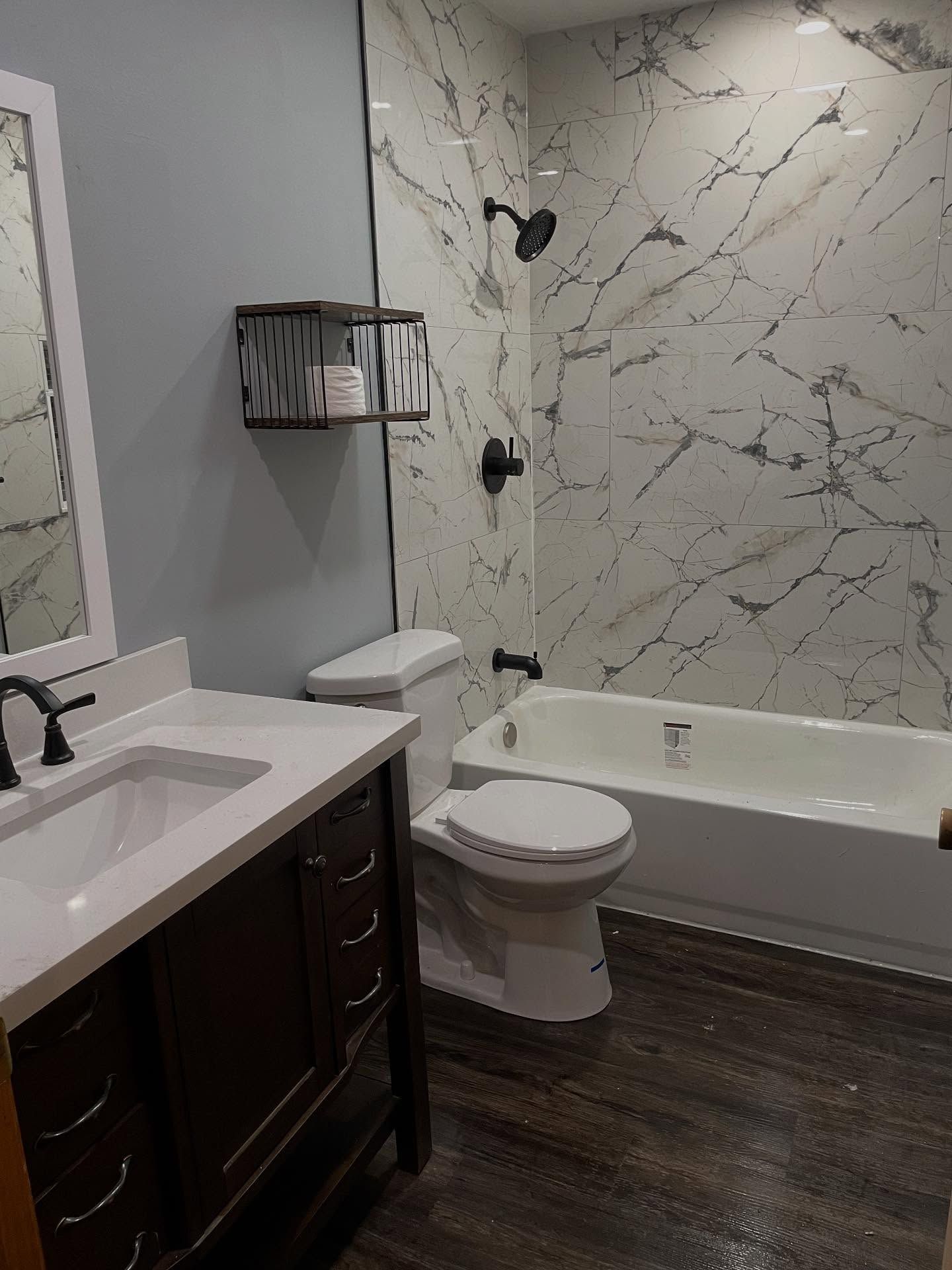
What Proper Flooring Installation Accomplishes
Moisture-resistant underlayment is installed between the subfloor and finish flooring to block water vapor rising from concrete slabs or traveling through plywood, and transitions around toilets, vanities, and tubs are sealed with flexible caulk that accommodates slight movement without cracking. Tile installations include grout joints filled completely and sealed after curing to prevent water infiltration, and cuts around fixtures are measured precisely so gaps remain tight enough to seal effectively but wide enough to avoid pressure cracks when caulk is applied.
Once the flooring is installed, you'll notice surfaces that remain level underfoot without tiles rocking or vinyl planks separating at seams, grout lines that stay intact without cracking at doorways where foot traffic concentrates, transitions around toilets and vanities that sit flush without lips that catch toes or collect debris, and water resistance that prevents staining or warping when spills aren't wiped immediately. Modern flooring styles improve visual appeal alongside durability, offering patterns and textures that coordinate with updated vanities, fixtures, and wall finishes.
Precision transitions matter around bathroom obstacles—toilet flanges require cuts that align with bolt positions, vanity toe kicks need clearance without excessive gaps, and shower thresholds must meet floor level without abrupt height changes that create tripping hazards. Blueprint Builders handles these fit details during installation so every edge aligns cleanly and waterproof seals remain intact at vulnerable joints.
Questions Before Starting Your Project
Homeowners considering bathroom flooring upgrades often ask about material performance, subfloor requirements, and installation logistics around existing fixtures.
What flooring materials resist bathroom moisture most effectively?
Porcelain tile offers the highest water resistance because it absorbs less than half a percent of its weight in water, while luxury vinyl plank with waterproof cores performs well in wet areas and installs faster than tile, and natural stone provides durability but requires sealing to prevent water absorption that causes staining.
How is subfloor damage identified before flooring removal?
Soft spots that compress underfoot, visible discoloration around toilet bases, musty odors indicating mold growth, and loose tiles that move when stepped on all suggest water has penetrated past the flooring surface and compromised the plywood underneath. Medina homes built before modern waterproofing standards sometimes have extensive subfloor damage hidden under intact surface flooring.
Why do some tile floors crack while others remain stable?
Cracking occurs when tiles are installed over deflection-prone subfloors without proper reinforcement, when thinset mortar isn't mixed to correct consistency or applied in full coverage, or when expansion joints are omitted at transitions between different materials that expand and contract at different rates.
When should toilets be removed during flooring installation?
Toilets must be removed when flooring extends under the base, which is standard practice because cutting flooring around the toilet contour leaves visible gaps and prevents proper sealing at the wax ring, and removing the toilet allows new flooring to install flat across the entire footprint.
What transition methods work best between bathroom flooring and adjacent rooms?
Transition strips in matching or complementary finishes bridge height differences between flooring types, T-moldings cover seams where two floating floors meet, and reducer strips taper down from thicker flooring materials like tile to thinner materials like carpet, all secured to the subfloor rather than relying on adhesive alone.
Blueprint Builders upgrades bathroom flooring where cracked tile, water damage, and outdated materials compromise both appearance and durability. Reach out at (216) 236-3276 to upgrade your bathroom flooring with modern waterproof materials that handle daily moisture exposure and align with your remodeling timeline.