Walls Finished to Precise Standards
Structural Drywall & Framing in Medina for basement remodels, room additions, and renovation build-outs requiring smooth, paint-ready surfaces
Framing misalignment creates walls that bow, corners that don't meet squarely, and drywall seams that crack after finishing work completes. Blueprint Builders provides professional framing, drywall hanging, taping, mudding, sanding, and wall finishing services in Medina for basement remodels, light commercial projects, and residential room additions where structural precision determines both immediate appearance quality and long-term durability. Homeowners, contractors, and DIY remodelers see these services during projects requiring professional finishing crews to complete walls ready for paint or texture application.
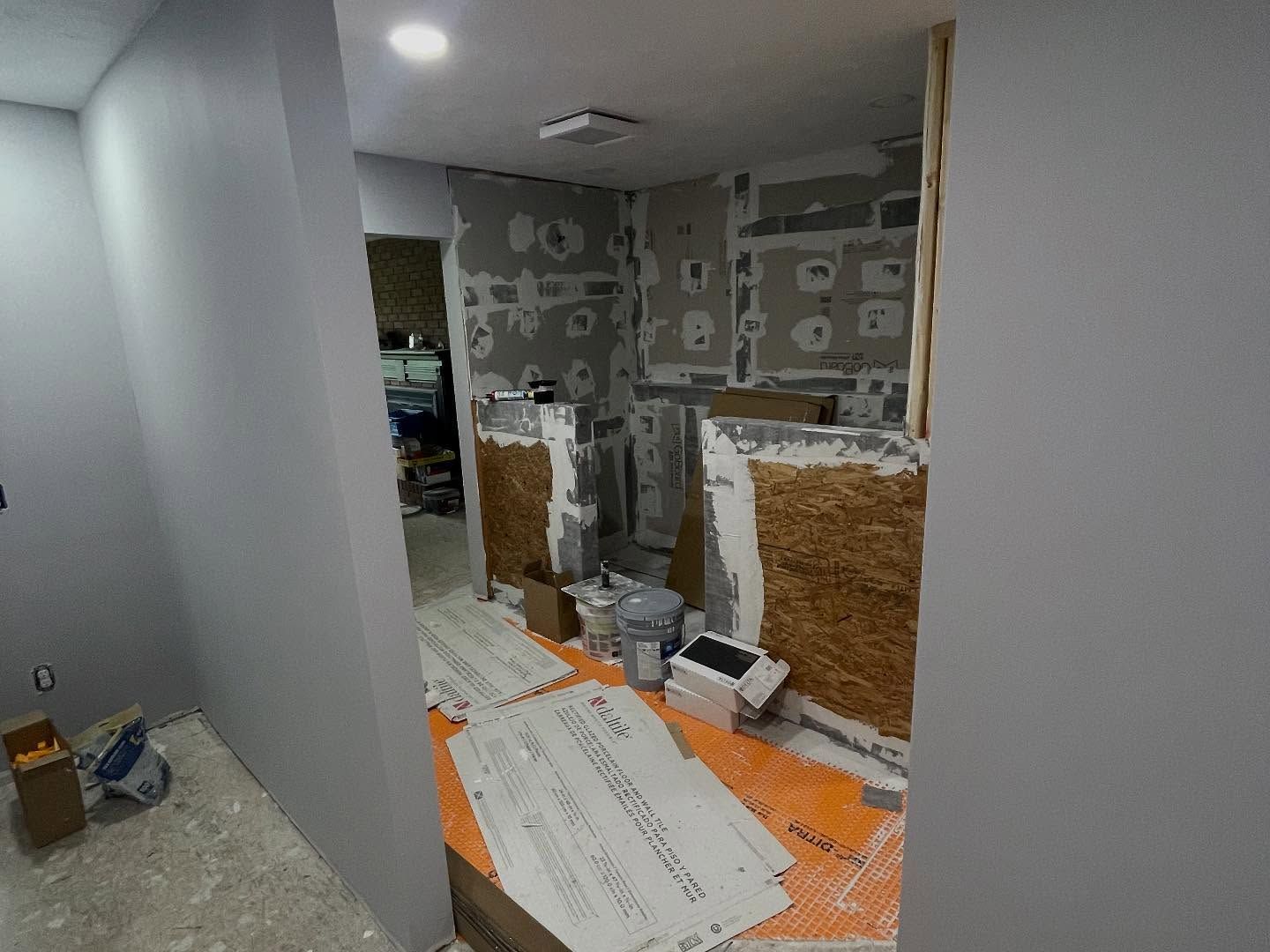
The process begins with lumber selection and layout verification to confirm walls align with existing structure, followed by framing installation that accounts for electrical and plumbing rough-ins. Drywall sheets hang with joints staggered to prevent continuous seams, then multiple coats of joint compound fill fastener dimples and seams before final sanding produces smooth surfaces. Each step builds toward walls that look clean under raking light and remain crack-free as the structure settles.
Request a detailed estimate to review framing and drywall requirements for your basement or addition project.
What Proper Framing and Finishing Require
Framing accuracy depends on material straightness, fastener spacing, and alignment checks at multiple stages, because once drywall covers the framing, correcting bowed studs or out-of-plumb walls requires tearing down finished surfaces. Straight walls start with culling warped lumber, using shims where needed, and verifying measurements before securing studs. Electrical box placement must align with framing to avoid drywall interference, and blocking gets installed wherever wall-mounted fixtures or cabinetry will attach later.
After drywall installation and finishing complete, you see crisp corner lines, invisible seams under paint, and flat surfaces that don't wave or dimple when viewed from an angle. The walls feel solid when you hang pictures or shelving, and cracks don't appear along joints during seasonal temperature and humidity changes. Paint coverage goes on evenly without the joint compound showing through as darker or textured patches, which happens when sanding or priming steps get rushed.
Finishing crews coordinate with other trades to sequence work efficiently, protecting completed drywall from damage during subsequent flooring, trim, or fixture installation. Clean job site practices keep dust contained and remove debris promptly, which matters in occupied homes where renovation work shares space with daily household activity.
Answers to Frequent Service Questions
Homeowners and contractors in Medina typically ask about project timelines, material choices, and what separates quality finishing work from rushed installations.
What factors affect drywall finishing timelines?
Joint compound requires drying time between coats, typically 24 hours per layer depending on humidity and temperature. Rushing this process by applying subsequent coats over damp compound causes cracking and poor adhesion. Projects involving large areas or multiple rooms extend timelines accordingly, and sanding must occur only after compound fully cures.
How does framing quality affect the finished wall appearance?
Studs installed out of plumb create walls that lean or bow, making drywall seams visible and preventing trim from sitting flush. Proper framing uses level and plumb checks at each stud, with adjustments made before sheathing or drywall installation locks everything in place. Correcting framing errors after walls close up requires demolition and rework.
Why do some drywall seams crack after finishing?
Cracks appear when joint compound lacks sufficient coats, when fasteners were overdriven and later pop through, or when structural movement exceeds what the joint system can accommodate. Proper taping uses paper or fiberglass mesh embedded in compound, with feathered edges that distribute stress rather than creating hard transitions prone to fracture.
What is the difference between levels of drywall finish?
Level 3 finishes are suitable for surfaces receiving heavy texture, while Level 4 provides smooth walls ready for flat paint under normal lighting. Level 5 includes an additional skim coat across entire surfaces for critical lighting conditions or high-gloss finishes. Most residential projects specify Level 4 unless specific aesthetic demands require higher standards.
Can drywall and framing services integrate with existing remodeling projects?
Framing and drywall crews coordinate with basement finishing, room addition, and renovation timelines, working after rough plumbing and electrical installations complete but before flooring, trim, or final fixture installation. Scheduling flexibility accommodates overlapping trades and prevents workflow bottlenecks that delay project completion.
Blueprint Builders delivers structural framing and drywall finishing throughout Medina, supporting residential and light commercial projects requiring professional wall construction and smooth, paint-ready surfaces. Contact the office at (216) 236-3276 to discuss your framing and finishing needs.